



Drug Interactions
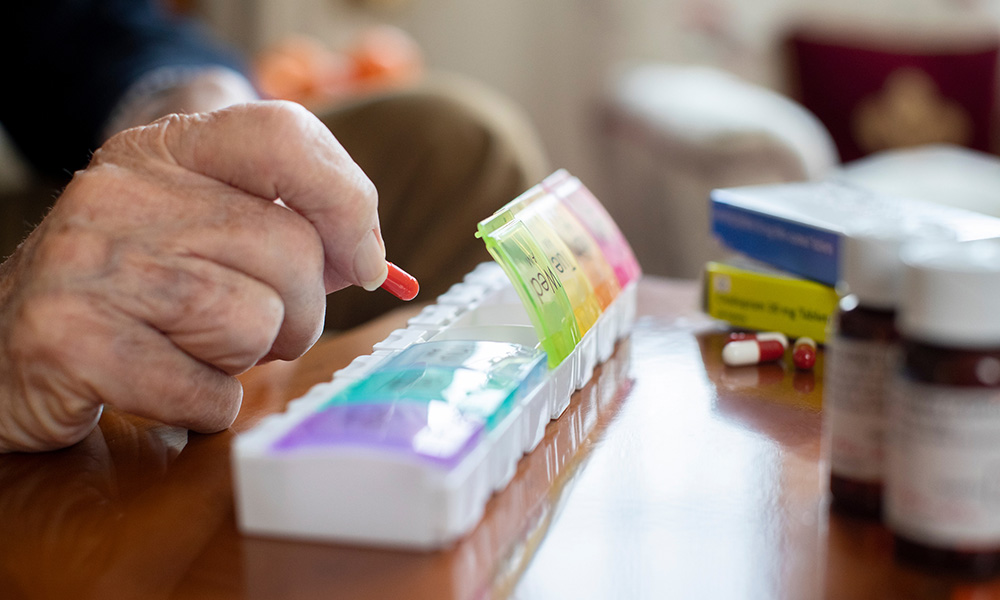
When it comes to medications and myasthenia gravis, knowledge is power. It is crucial that everyone who is part of your healthcare team is aware that you have MG and what medications you are taking. This includes everyone from your family physician to your dentist and any specialist, too.
Introduction
When it comes to medications and myasthenia gravis, knowledge is power. It is crucial that everyone who is part of your healthcare team is aware that you have MG and what medications you are taking. This includes everyone from your family physician to your dentist and any specialist, too.
Some prescriptions and medical treatments can worsen MG symptoms or, in rare cases, lead to serious complications. MGSC is fortunate to have had Dr. Michael Nicolle, a leading MG specialist from London, Ontario, put together a “Drug Interactions” guide, which we present to you below.
Dr. Nicolle’s balanced approach will help you understand which medications require extra caution while reassuring you that having MG and other medical conditions can be managed safely and effectively.
Drugs and the Risk of Worsening Weakness in Myasthenia Gravis
Reviewed March 2025. Michael. W. Nicolle MD FRCPC. D.Phil. Wilma J Koopman NP PhD
Executive Summary
Many medications have been reported to worsen weakness in patients with MG. Few are absolutely contraindicated but caution is advised with many and if possible a medication NOT on this list should be used. The ones shaded in blue are the ones that I have seen reactions most commonly or (for general anaesthetics) precautions make sense or may increase toxicity of other medications used in MG.
Proof that a particular drug was responsible for worsening in an MG patient is often lacking or poorly documented. In my experience, more MG patients can take these medications without ill effect than will become weak because of them. The risk that a given medication will exacerbate MG must be balanced by the need for that particular medication and the lack of a suitable substitute. None of these medications are absolutely contraindicated in patients with MG. However, whenever possible substitutes should be used.
If there are no acceptable substitutes, the patient should be monitored carefully for signs of worsening of their MG while on the medication and should be warned about this possibility. This is especially true if breathing or swallowing is affected in MG. There are many such ‘lists’ of medications to avoid. This is mine, based on the literature and on my experience with 20+ years of managing many hundreds of MG patients.
Drugs which are most consistently reported as potentially being a problem are indicated. For some of the macrolides and fluoroquinolones the FDA has issued a ‘Black Box’ warning NOT to use in myasthenia gravis.
Antibiotics
- Aminoglycosides: Neomycin, gentamicin, streptomycin, kanamycin, tobramycin
- Macrolides: Telithromycin, Erythromycin, clarithromycin, azithromycin etc
- Fluoroquinolones: Norfloxacin, Ofloxacin, Ciprofloxacin, Levofloxacin, Moxifloxacin etc
- Others (probably relatively safe): Amikacin, Polymixin B, colistin, Tetracyclines, oxytetracyclines, Lincomycin and clindamycin, Ampicillin
Cardiovascular
Class 1a antiarrhythmics impair neuromuscular transmission , pre and post synaptic levels (Sheik, S.et al Journal of Clinical Medicine 2021)
- Beta blockers – probably safe! Including topical/ocular
- Quinidine & Quinine* (* probably safe in beverages)
- Procainamide
- Calcium channel blockers – probably safe! Verapamil, nimodipine etc.
- Clonidine
- ACE inhibitors (Don’t worsen MG but may potentiate bone marrow suppression if on azathioprine)
CNS Active
- Phenytoin, Trimethadione
- Lithium, Chlorpromazine, Promazine
- Trihexyphenidyl
- Morphine and other narcotics, benzodiazepines & barbiturates (because of their sedating effects!)
- NB – Probably safe unless significant bulbar or respiratory compromise is present
- Amantadine
Anti-rheumatic
- Chloroquine
- D-penicillamine (Can cause MG in some individuals, usually reversible once stopped)
- Prednisone (High doses can temporarily worsen MG within first 1-2 weeks. Start low and gradually increase.)
- NB – There is NO ‘reaction’ between mestinon and prednisone, despite warnings in pharmacy databases!
General Anaesthetic Drugs
- Non-depolarizing agents: Pancuronium, Vecuronium, Atracurium – increased sensitivity in MG
- Succinylcholine: Decreased effect in MG, increased if on pyridostigmine
Immune checkpoint Inhibitors (ICI’s) Immunotherapy for cancer
- Pembrolizumab (Keytruda)
- Nivolumab (Opdivo)
- Atezolizumab (Tecentriq)
- Avelumab (Bavencio)
- Durvalumab (Imfinzi)
- Ipilimumab (Yervoy)
Other
- Allopurinol & Febuxostat (Do not worsen MG but increase risk of azathioprine toxicity)
- Procaine and lidocaine (iv) (No risk of local anaesthetics in MG)
- Magnesium (Only doses that raise serum Mg+++ level, safe in vitamins and health supplements at usual doses)
- Topical ophthalmic drugs: Timolol, beaxol, echothiophate – probably safe
- Lactate
- Iodinated contrast agents (also probably safe but on many ‘lists’)
- Citrate anti-coagulant
- Diphenhydramine
- Emetine
- Botulinum toxin
- Deferoxamine -chelating agent used for hemochromatosis
- Statins-cautiously or at lowest dose
- In all cases, medications should be considered as the cause of an unexplained deterioration in a myasthenic patient