


Wilma's Story
Much of my work has centered on understanding and improving the lived experiences of people with chronic neuromuscular conditions, including MG—whether through direct care, clinical research, qualitative inquiry, or developing educational resources for patients and health professionals.
Wilma's Story
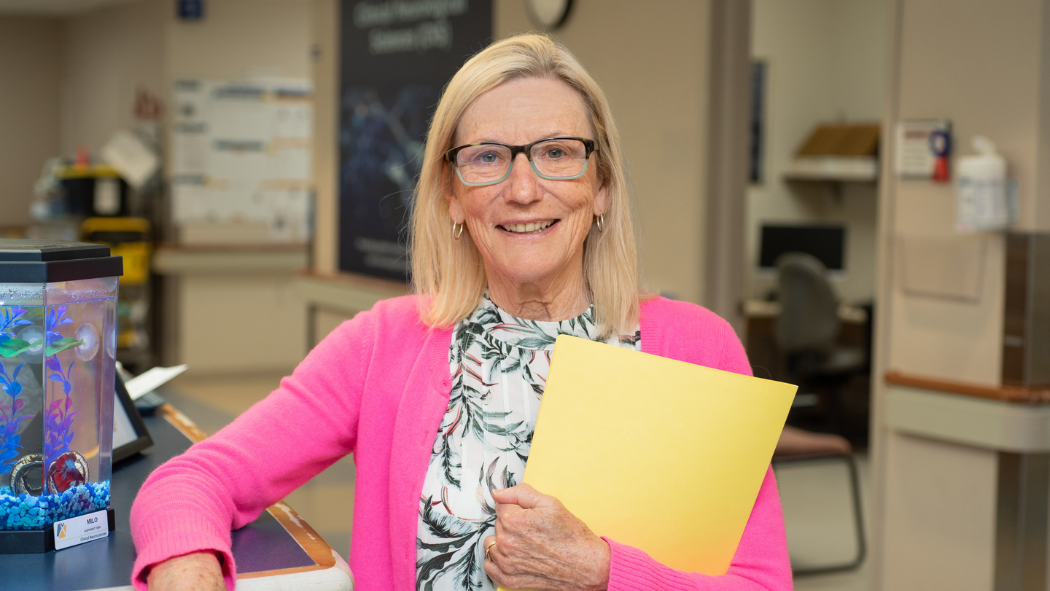
I am a Nurse Practitioner with more than four decades of experience in neuromuscular care, including over 35 years dedicated specifically to Myasthenia Gravis. My career has spanned clinical practice, research, teaching, and leadership roles focused on chronic neuromuscular diseases. I served for many years at the London Health Sciences Centre, Neuromuscular Clinic and continue today as a Nurse Researcher and Adjunct Professor at Western University.
Much of my work has centered on understanding and improving the lived experiences of people with chronic neuromuscular conditions, including MG—whether through direct care, clinical research, qualitative inquiry, or developing educational resources for patients and health professionals.
- What are the most common challenges you see MG patients and their loved ones facing?
MG is unpredictable, and that unpredictability is often at the heart of the challenges patients and their families navigate. I regularly see difficulties related to:
- Fluctuating symptoms that can shift hour to hour, creating uncertainty about what each day will bring.
- Fatigue and weakness that limit daily activities and can be misunderstood by others.
- Emotional strain, particularly the fear of exacerbations or crises.
- Complex treatment decisions, including immunotherapies, side effects, and long-term monitoring.
- Communication gaps in the healthcare system, where patients sometimes struggle to “get airtime” to tell the full story of their experiences.
- The caregiver burden, especially when support persons feel ill-equipped to help or understand symptom variability.
These challenges deeply affect quality of life and reinforce the importance of compassionate, informed, and consistent support.
- From your professional perspective, what does “good support” for an MG patient look like in practice?
Good support begins with listening deeply—ensuring patients feel heard and understood, not rushed or dismissed. In practice, it includes:
- Validating the patient’s lived experience, especially the nuanced, fluctuating nature of MG.
- Timely access to knowledgeable clinicians who recognize early signs of deterioration.
- Clear communication about treatment plans, potential side effects, and what symptoms require urgent attention.
- Collaborative care, where the patient, family, and healthcare team share decisions.
- Education tailored to the patient’s level of understanding, culture, and priorities.
- Supporting self-management, including strategies for energy conservation, medication adherence, and emotional wellbeing.
- Respecting patient narratives, recognizing that partial or “incomplete stories” in clinical encounters often reflect deeper needs or concerns.
Ultimately, good support acknowledges MG as both a medical and profoundly human experience.
- What do you wish more healthcare providers understood about MG and treating MG patients?
I wish more providers appreciated how variable and fragile MG can be, and how quickly a patient’s respiratory or bulbar function can change. Even mild symptoms warrant attention. Additionally:
- MG is not just about muscle weakness—it is about the person living with that weakness.
- Patients often struggle to articulate the full complexity of their symptoms.
- Fatigue is real and can be debilitating.
- Diagnostic uncertainty or dismissal can cause long-lasting mistrust.
- Effective management requires listening, patience, and continuity, not just prescriptions and test results.
- Care must be individualized: what looks stable on paper may not reflect the lived reality.
Understanding these nuances leads to safer, more person‑centred care.
- Can you share an example (without identifying details) of something you have learned from an MG patient that changed how you view the disease or your approach to treating it?
A patient once told me that the most exhausting part of MG wasn’t the muscle weakness itself—it was the constant need to explain the weakness to others. They described feeling “invisible” because their symptoms fluctuated, making it hard for family, friends, employers, and even clinicians to grasp what they were going through.
That conversation reshaped how I approached my encounters. I began asking not only about physical symptoms but about how those symptoms were being understood by the people around them. It reminded me that supporting MG patients means advocating for their stories—ensuring they have space to express both what is said and what is difficult to say. This realization also influenced my later qualitative research on patient narratives and “incomplete stories” in chronic illness.
- If you had one piece of advice for someone newly diagnosed with MG, or for their families, what would it be?
You are not alone—and you don’t have to learn everything at once.
MG is manageable, and many people lead full and meaningful lives with it. Find a healthcare team that listens to you, ask questions without hesitation, and bring someone with you to appointments for support. Learn the early signs of worsening symptoms, but don’t let fear overshadow hope. With the right information, treatment, and support, MG becomes something you can live with, not something that defines you.
- 7. How has your research influenced the way you support MG patients clinically?
Answer:
My research has taught me that clinical care is always a shared narrative—patients bring their stories, and clinicians bring their expertise, but healing happens in the space between the two. Studying patient storytelling, communication barriers, and person-centred care has helped me approach every encounter with curiosity rather than assumption. It has also reminded me that every symptom has a context, and every patient has a perspective that deserves space in the room.